Room 1
Here All Along
Views we walk past every day, until someone stops to look.
Almost nothing in this room was meant to be remarkable. A branch overhead. Leaves browning at the edges. A picnic table nobody was sitting at.
Lea photographs these things the way most of us forget to look at them: slowly, as if they might not be there tomorrow. She looks straight up through an olive tree and finds a pocket of blue. She waits beside churning water until the spray turns into a rainbow. She stands on a hillside at the hour the light goes gold and catches a flock of sheep with an entire city behind them.
The room follows a single day, from that first glance upward to the moon over the silos. Every view here was already there, on the way to somewhere else. Most of us walked right past it.
She didn't. That's the gift of her eye: she doesn't go looking for beautiful places. She notices that the place she's standing in already is one.
2026 · Lebanon
Curator’s note
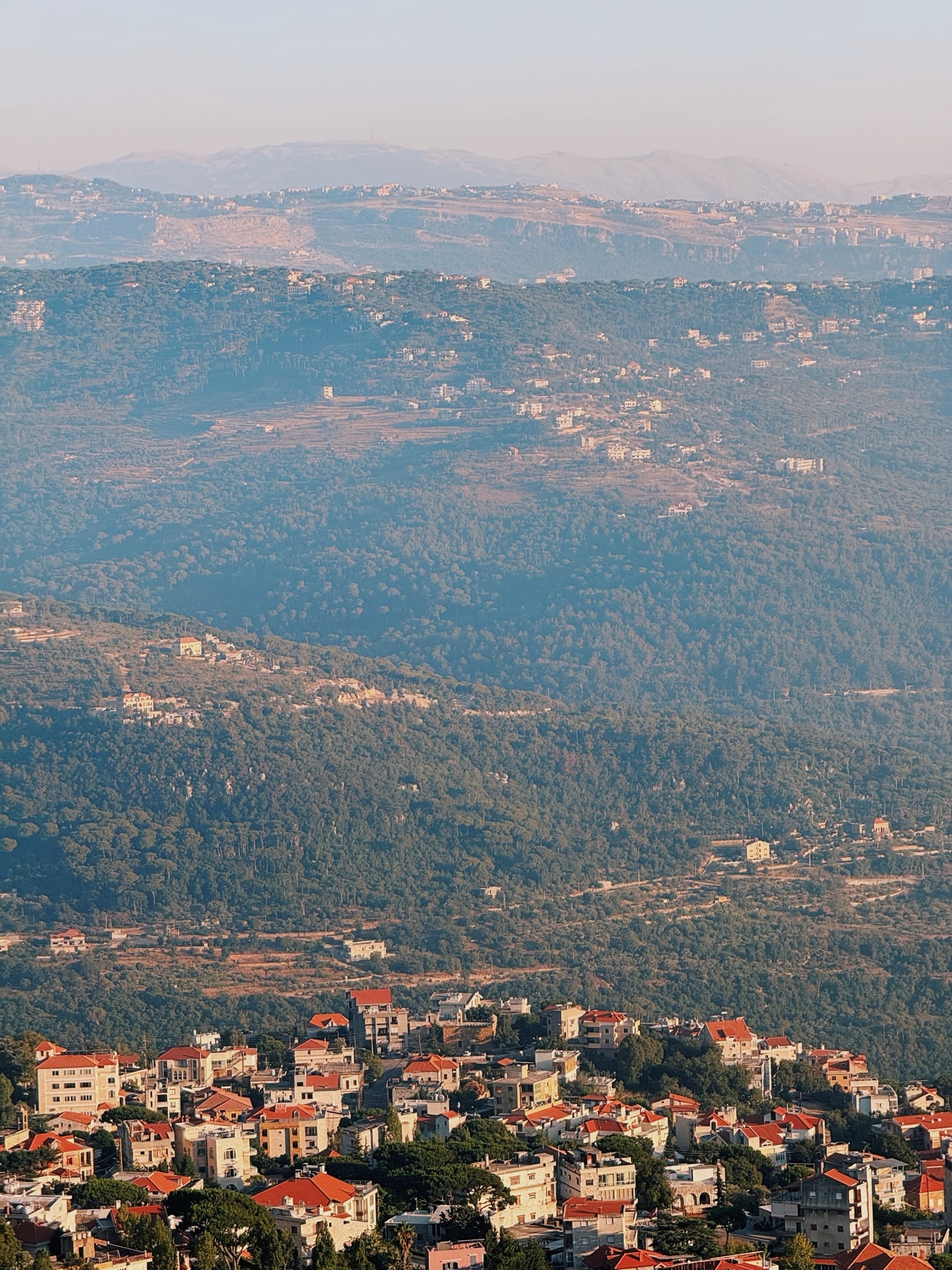
Every room needs a first image, and this one chose itself. This is the view from Lea's balcony in Dahr El Souane: red roofs close below, pine-covered ridges folding back one behind another, and the mountains fading into haze at the far edge. She has photographed it again and again, in every kind of light, and she still isn't finished with it. That's what this room is about. It isn't about finding something new to look at. It's about refusing to stop seeing what's already outside the window.
2019 · Lebanon
Curator’s note
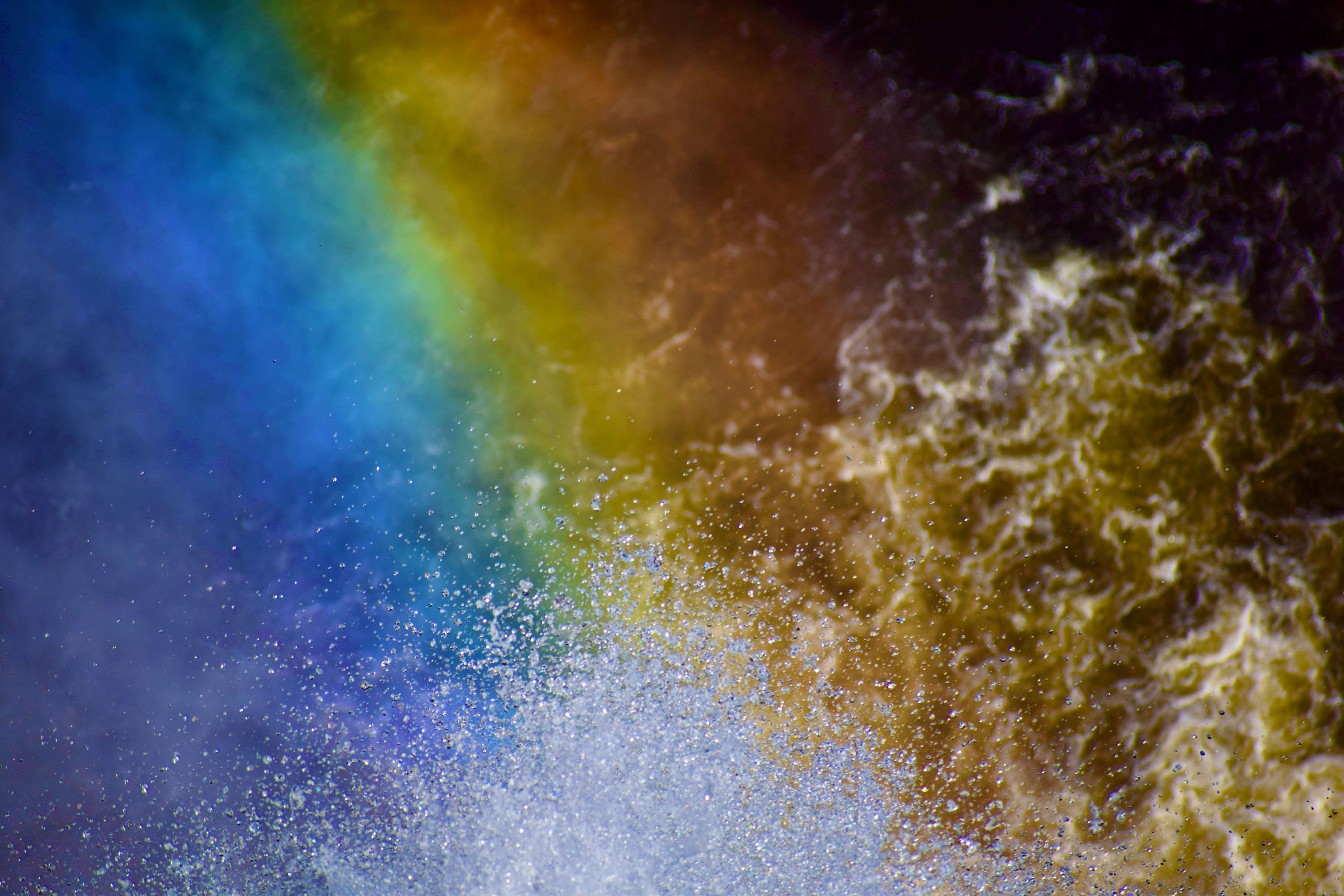
Stand near falling water on a sunny day and a rainbow will catch the corner of your eye for a second, then slip away. Lea went the other way: a long lens, a shutter fast enough to stop every drop mid-air, and a frame so close the rainbow stops being an arc and becomes the whole sky. Blue on one side, gold on the other, and a million tiny lenses in between.
2023 · Lebanon
Curator’s note
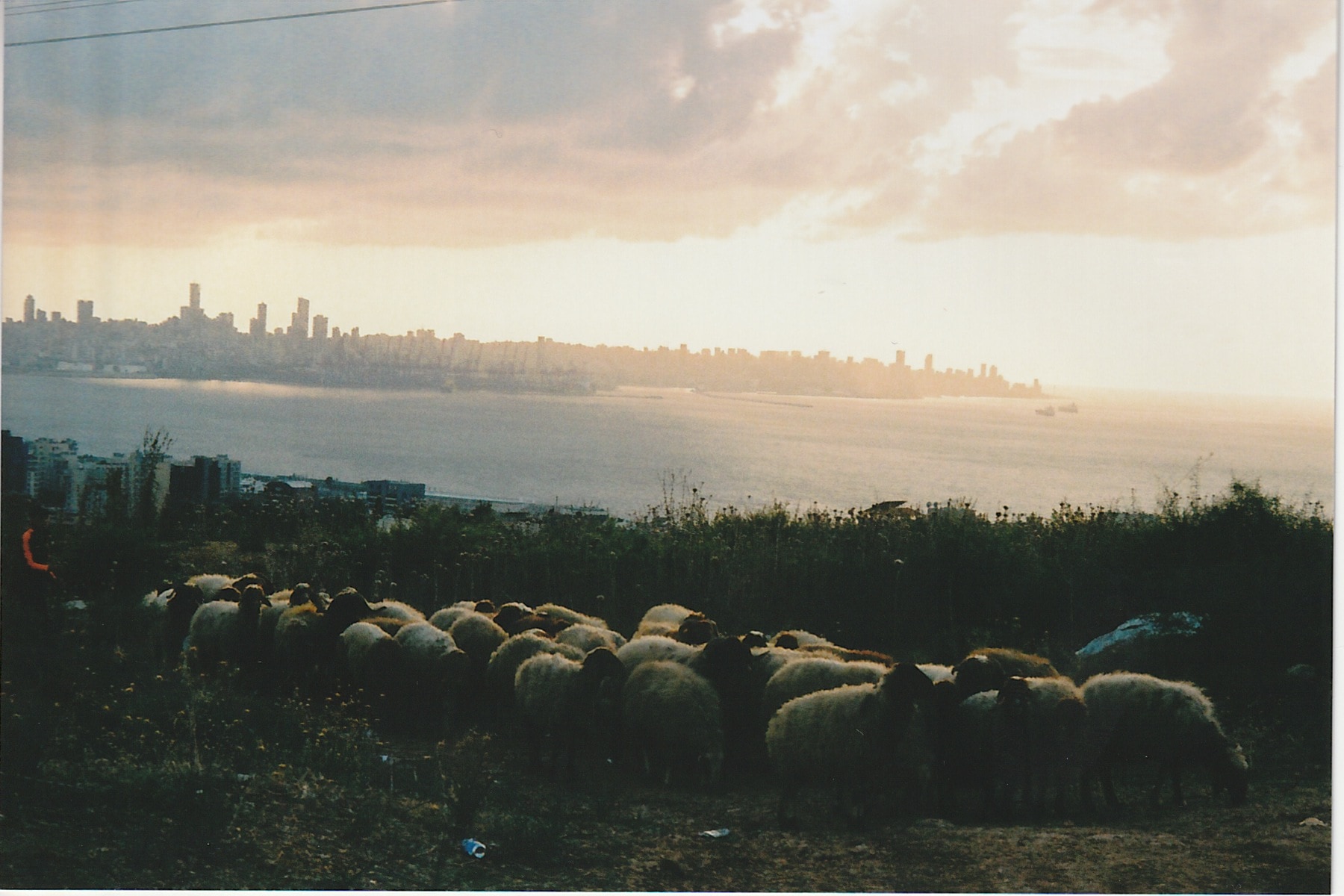
Beirut sits on the horizon: towers backlit in gold, ships waiting in the bay. In the foreground, a flock of sheep couldn't care less. Lea found the seam where the two meet, the edge of town at the hour the light makes everything look like a memory. On film, it already is one. The power line stays in, and so does the bottle in the grass. Nothing here was arranged.
2021 · Vancouver
Curator’s note
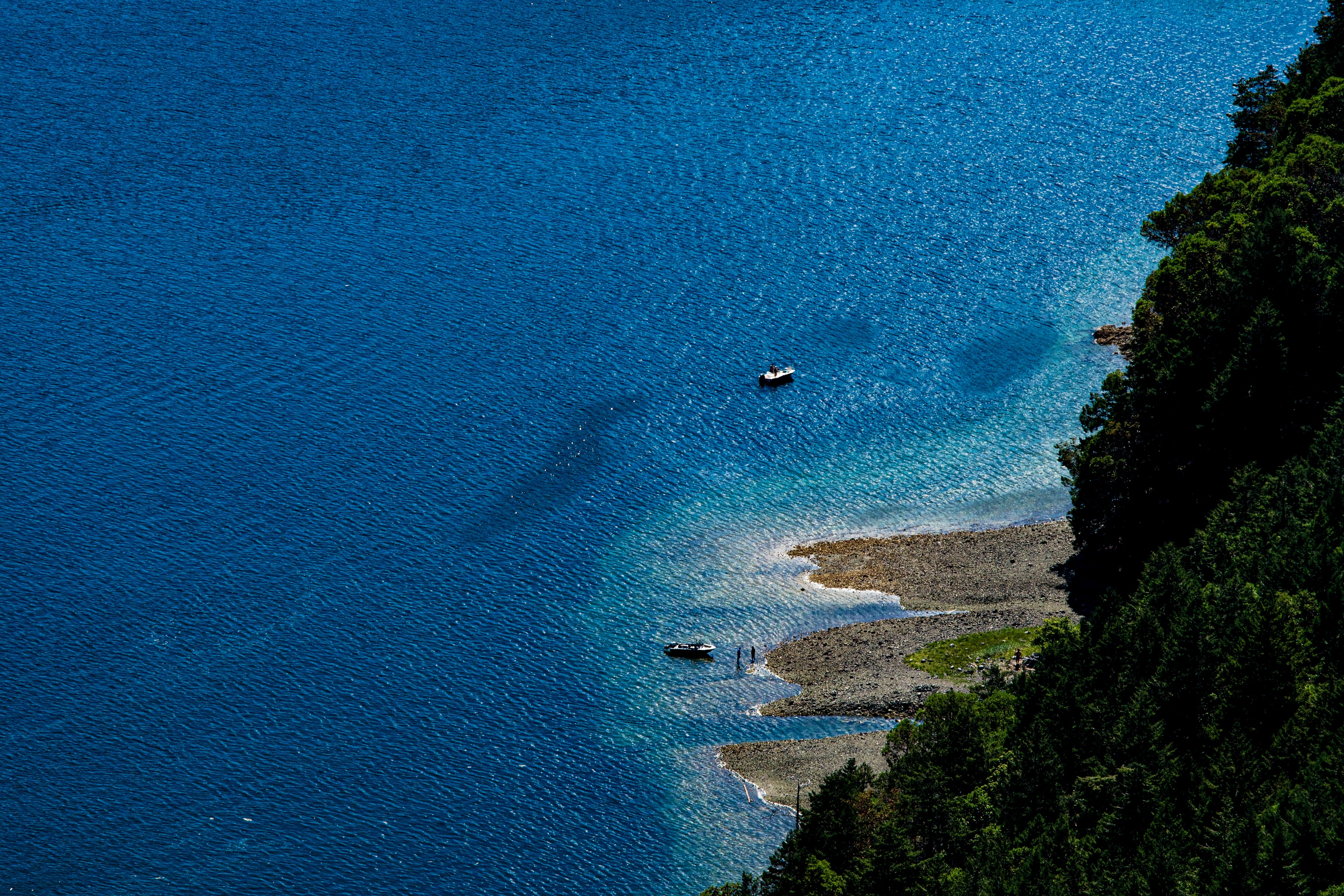
From high enough up, the sea stops being one color. It's navy where it's deep and turquoise where it isn't, and you can read the shape of the seabed from the shadows under the surface. Two boats, two people wading out to meet one of them, and a forest that runs right down to the waterline. Lea gives most of the frame to open blue, and that emptiness is where the scale comes from.
2026 · Lebanon
Curator’s note
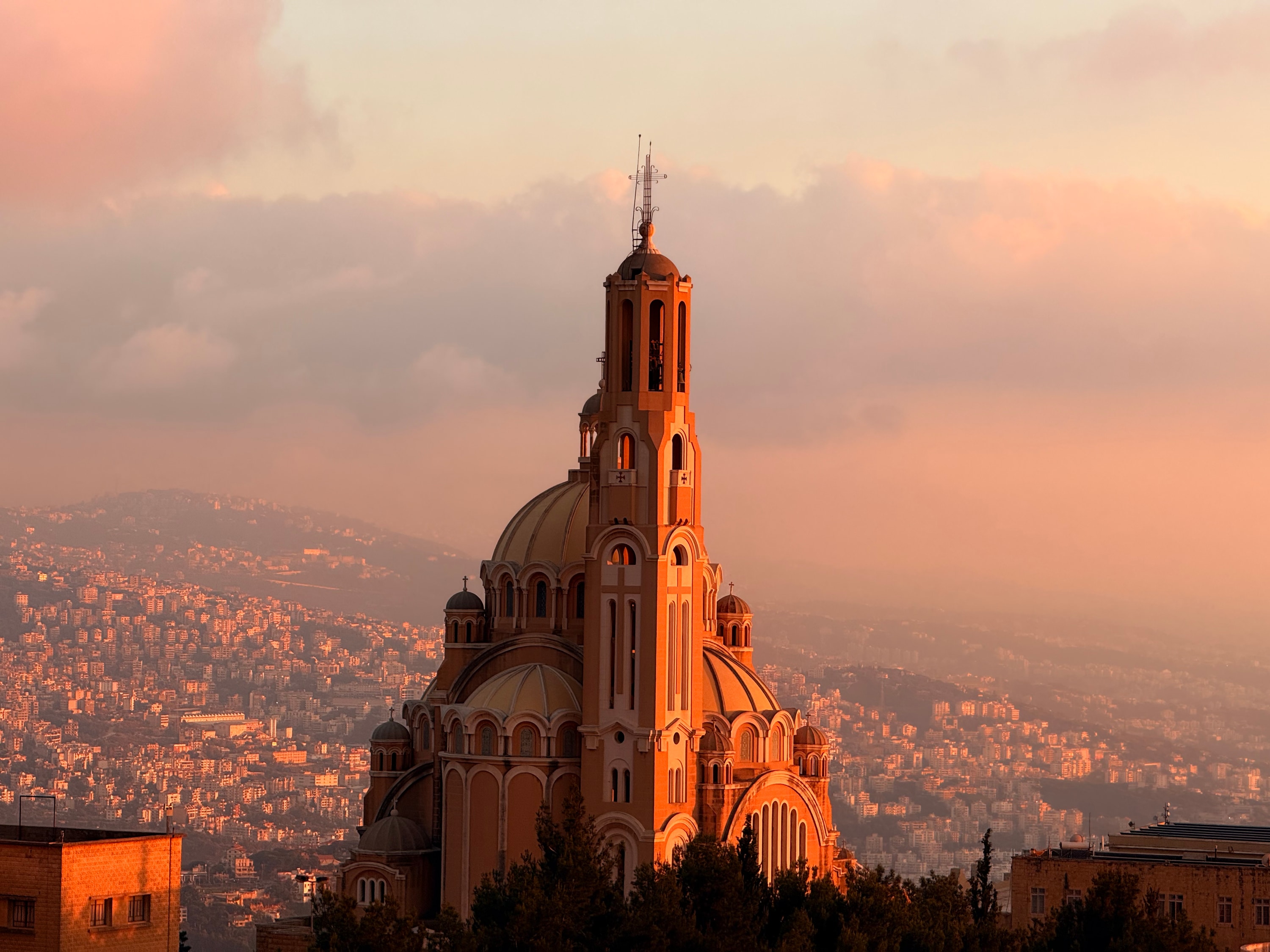
On the hills above the bay, the Basilica of Saint Paul catches the last light before anything around it does. It was built in the Byzantine style by the Melkite Greek Catholic Church, just south of Our Lady of Lebanon, the white statue that draws pilgrims to Harissa from across the country. Most visitors photograph the statue. Lea turned her lens to the dome instead, at the minute the whole hillside went pink. A long lens stacks the town behind it, house on house, so the basilica reads less like a landmark and more like part of the neighborhood. For the people who live there, it is.
2025 · Quebec
Curator’s note
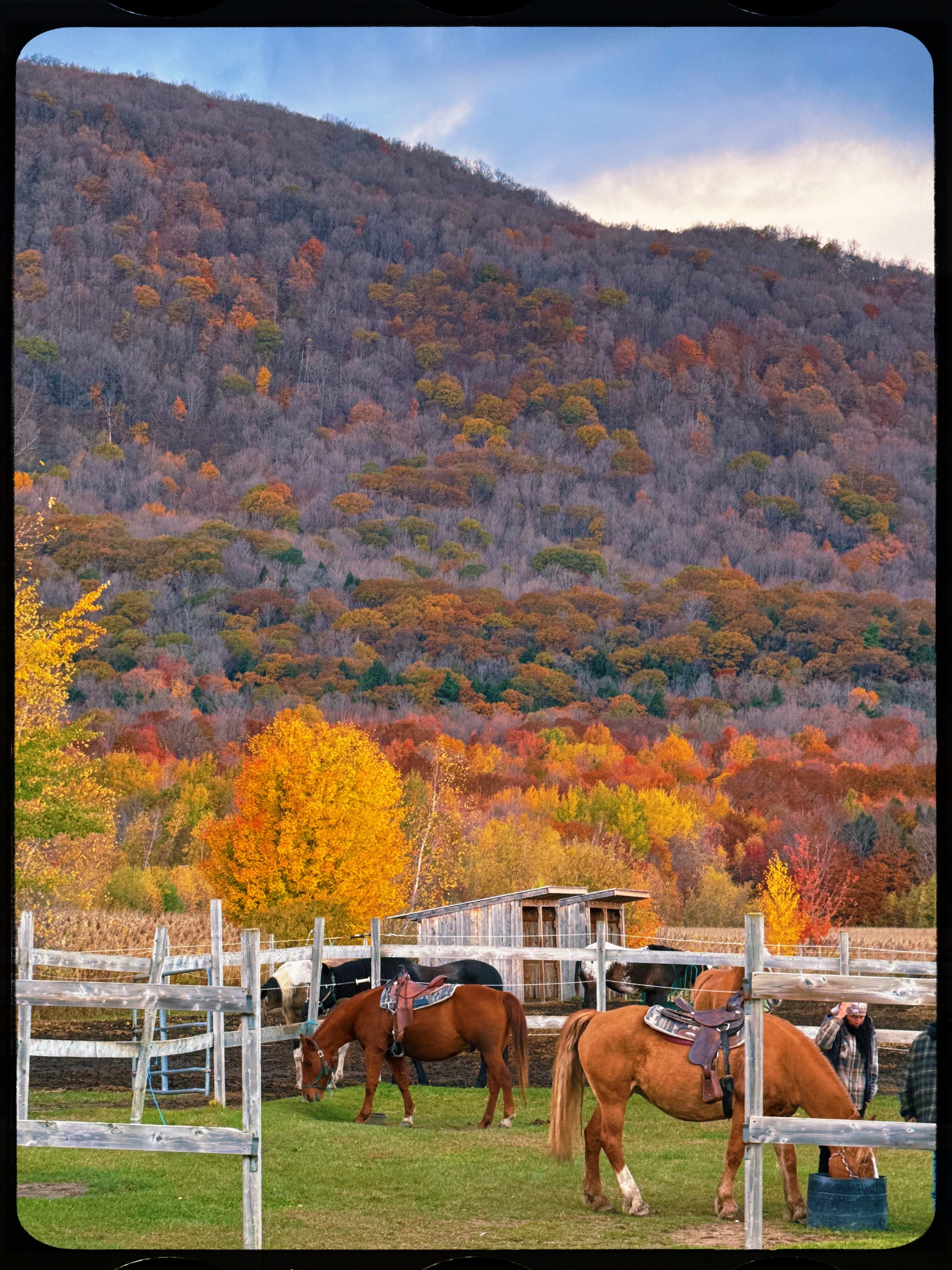
Every fall, the mountain does this for a couple of weeks, and the horses don't look up. Saddled and waiting for Lea and the gang to join them on a ride through these woods. Lea frames it the way a postcard would, then lets the ordinary in: a fence post cutting through the frame, a water bucket, someone adjusting a cap at the edge. It's the loudest view in this room, and the only ones who don't seem to notice are the ones standing in it.
Curator’s note
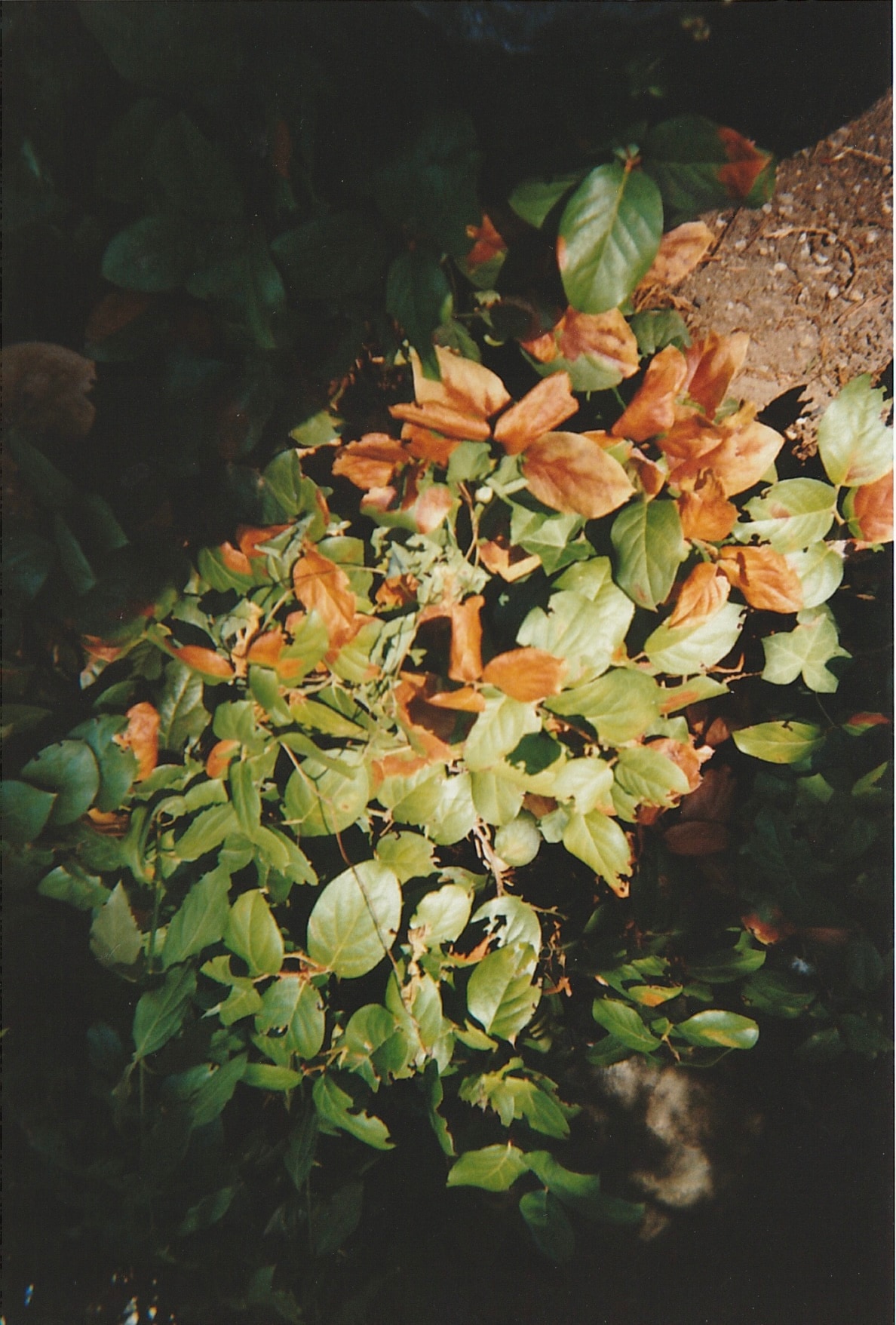
Nobody stops for this: a patch of ground cover at the foot of a tree, half of it still green, half of it already letting go. Lea caught it in a single pool of sun, the kind that lasts a few minutes before the shade takes it back. On film, the greens go soft and the browns turn copper, and an ordinary corner of Montreal starts to look like a still life. It's the smallest view in this room, and maybe the most honest one. This is what a season looks like up close, while it's still deciding.
2017
Curator’s note
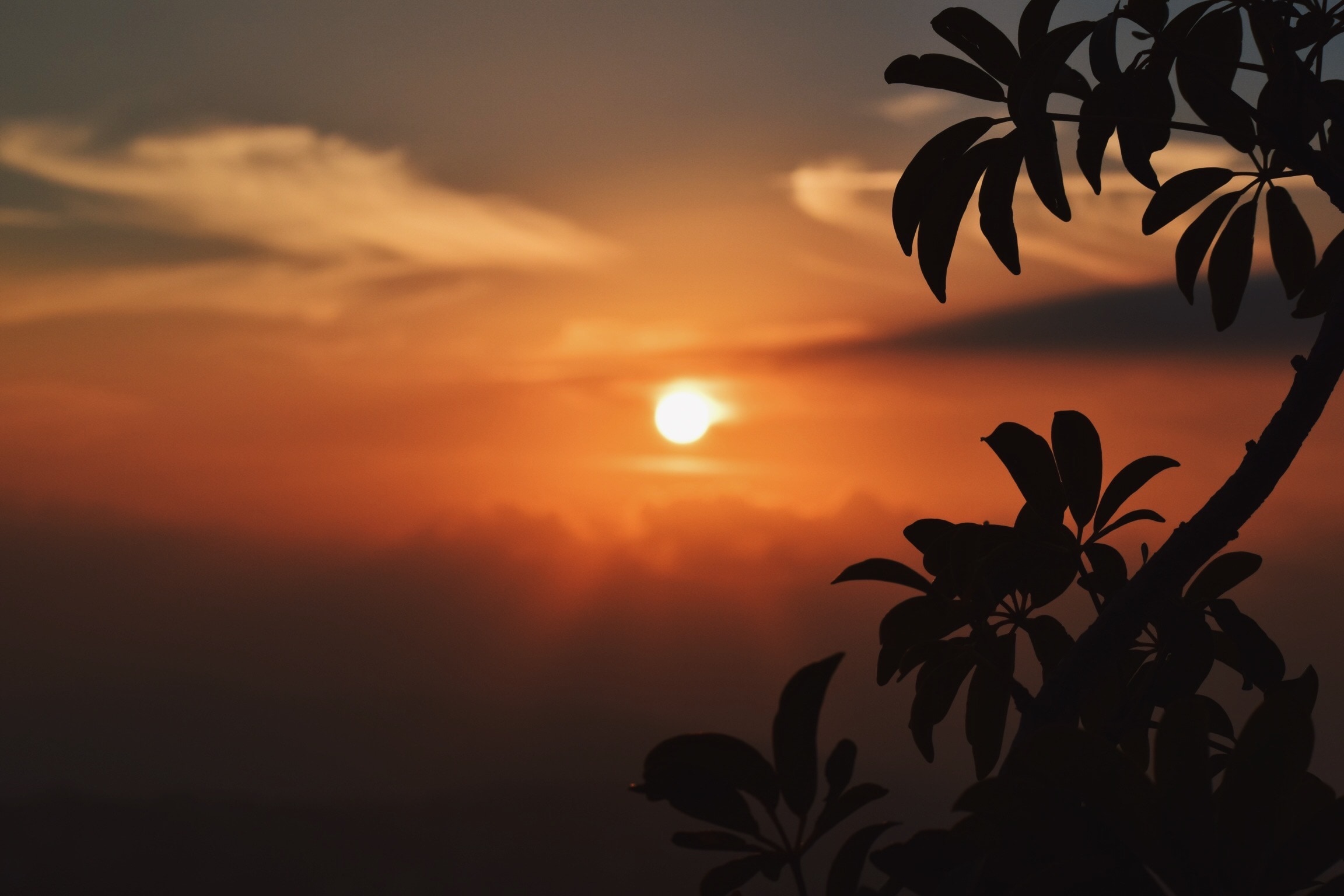
Sunsets might be the most photographed thing there is, and most of them look the same. This one is from 2017, the earliest photograph in this room, and Lea's instinct is already there: she doesn't give the sun the whole frame. A branch leans in from the right, close enough to feel like you're standing under it, and the haze softens everything behind it into copper. It isn't a picture of a sunset. It's a picture of watching one, from a specific place, on a specific evening that would otherwise have been forgotten.
2021 · Vancouver
Curator’s note
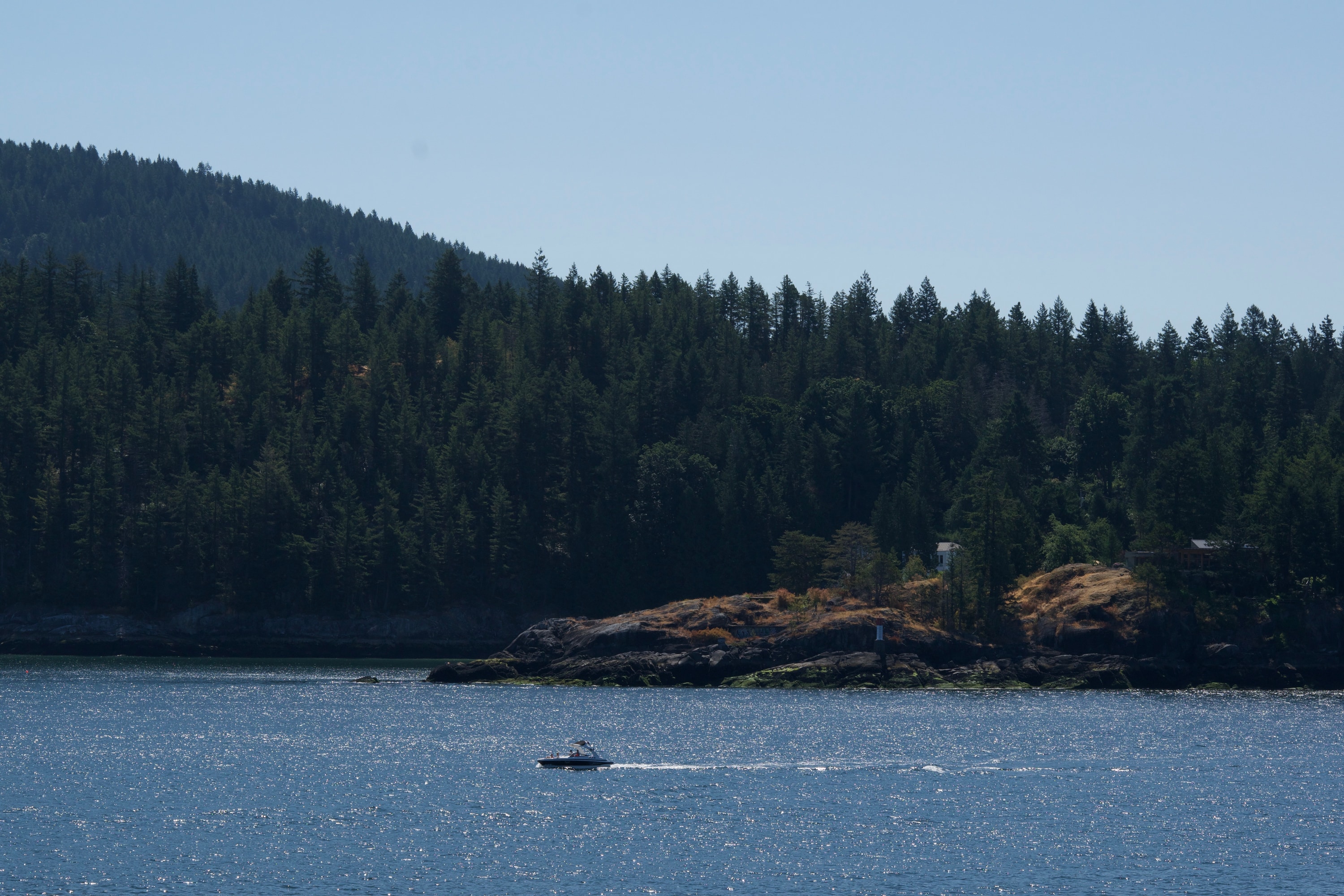
Same summer, same coast as Shallows, but this time from down near the water instead of high above it. A single boat cuts across the frame, and its wake is the only straight line in a landscape made of trees, rock and glare. A couple of houses hide in the forest, and a small white marker stands on the rocks. Lea leaves the boat tiny on purpose. Somebody out there was having the best afternoon of their summer, and they never knew anyone saw it.
2023 · Montreal
Curator’s note
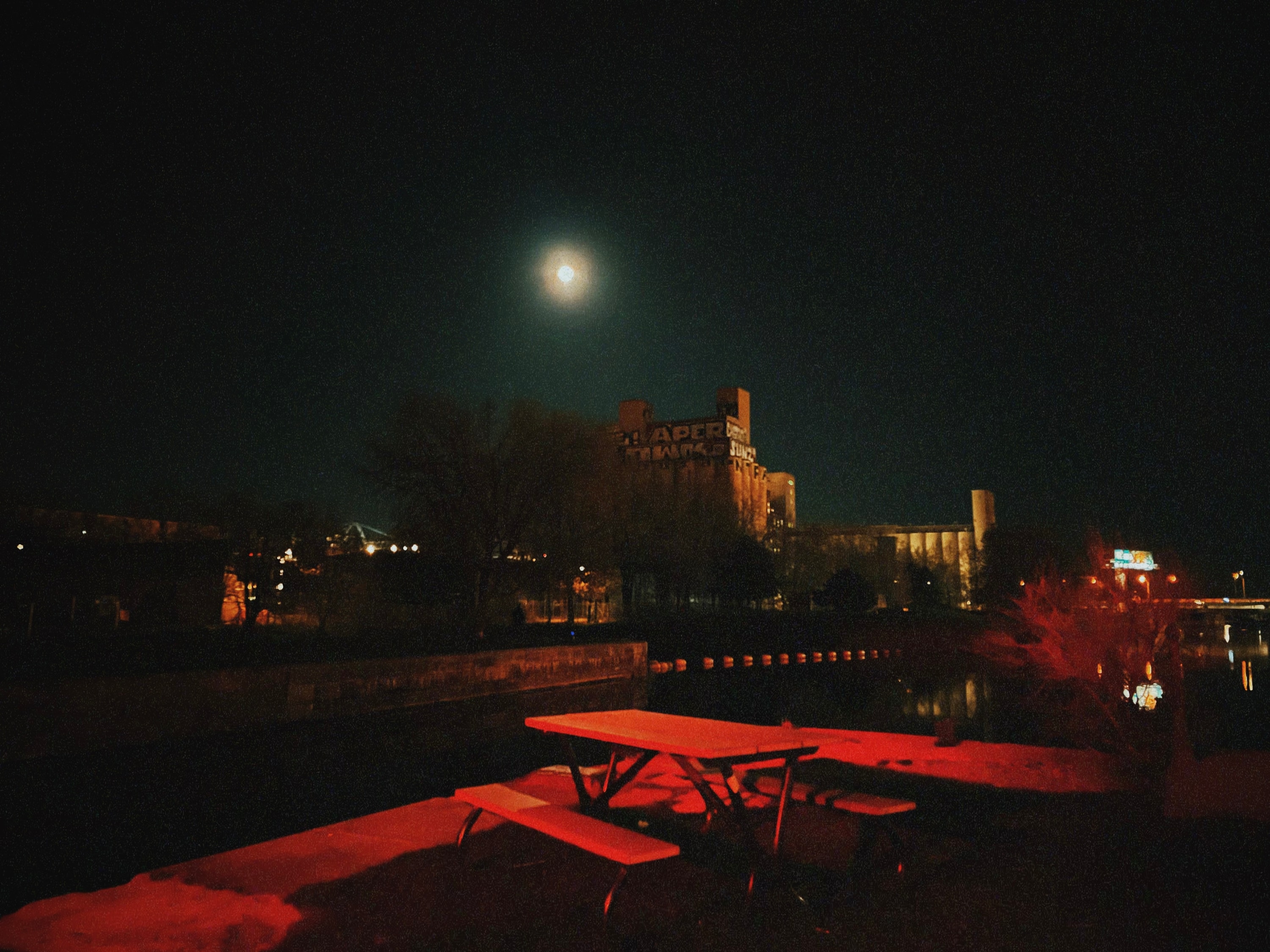
The room ends where the day does. For most of the last century, Silo No. 5 moved wheat from the western prairies onto ships bound for Europe. It has stood empty since 1994, and the only thing it collects now is graffiti. Lea found it from across the canal under a full moon, with an empty picnic table lit red by a light somewhere out of frame. Earlier in this room there was another table, in a forest, in daylight. Same object, different hour, and nobody sitting at either one. That was always the point: the view was here all along, waiting for someone to stop.